Colorado sun,
sized by the numbers.
Solar, home batteries and EV charging — designed and installed by our own local crews. We run the real math for your utility, roof and town, and we’ll tell you when it doesn’t pencil out.
Instant estimate · Step 1 of 6
live mathSystem size
6.9–10.6 kW
16–25 panels
Installed cost
$19.3k–$34.5k
before incentives
Year-1 savings
$1.5k–$2k
bill reduction
Directional ranges from your bill, your utility’s export rules and our $2.80–$3.25/W installed pricing. Not a quote — your roof, shading and rate plan decide the real number.
Refine my estimate — 5 quick questionsThe 2026 reality check
The 30% credit is gone. The math isn’t.
Dec 31, 2025Ended
Federal 30% homeowner credit ends
§25D: no credit for systems whose installation is completed after Dec 31, 2025.
Jun 30, 2026Ended
EV-charger & builder credits end
§30C for chargers placed in service after Jun 30, 2026; §45L for homes acquired after that date.
Jul 4, 2026Ended
Commercial begin-construction cutoff
Solar projects that began construction by Jul 4, 2026 keep a longer runway under §48E.
Dec 31, 2026Deadline
Colorado 10% battery credit — last tax year
C.R.S. 39-22-546 covers home batteries for tax years through 2026.
Dec 31, 2027Deadline
Lease/PPA & commercial solar placed-in-service deadline
§48E for solar started after Jul 4, 2026 requires service by Dec 31, 2027.
Jan 1, 2033Runs longer
Storage credit starts stepping down
§48E storage: full value for construction starting through 2033, then 75% (2034), 50% (2035). Colorado’s home-battery sales-tax exemption also sunsets Jan 1, 2033.
Leases & PPAs carry federal value
Third-party-owned systems can still use the commercial §48E credit — passed through as payments typically 20–30% below your utility rate.
Read the detailsColorado’s battery credit: tax year 2026
A 10% state income-tax credit on home batteries (C.R.S. 39-22-546) covers tax years through 2026, and batteries are exempt from state sales tax.
Read the detailsYour utility still sets the payoff
Export credits range from 1:1 kWh banking to avoided-cost rates. That single rule moves payback more than any incentive left.
Read the details25 years, three paths
What you’d pay the utility vs. what solar costs
Drag the bill and pick a rate-growth scenario. Nobody knows future utility prices, so we show you a band — not a promise.
The honest takeaway: with 1:1 net metering, owned solar typically overtakes the utility bill in the low-to-mid teens of years. With weaker export credits it takes longer — and sometimes it doesn’t happen.
Why your utility matters most
Same sun. Different rules. Different payback.
Summaries as of September 2026 — rules change; each guide lists sources and dates. See all Colorado utilities
How it works
Noon, the 5–9 pm peak, and the day the grid goes down
Sun runs the house, fills the battery, exports the rest
Panels cover what your home is using right now. Extra energy charges the battery, then flows to the grid, where your utility credits it under its export rules.
- Solar production
- Battery charge / discharge
- Grid export / import
What we install
Everything from the roof to the garage outlet
For business
Commercial, agricultural & nonprofit
Solar placed in service by the end of 2027 can still use §48E; storage keeps its credit much longer. We model demand charges, not just kWh.
Start with your situation
What’s actually going on at your place?
Wildfire shutoffs are real
How long would your house run?
Xcel de-energized about 50,000 customers in December 2025 and about 18,000 more on March 14, 2026 to reduce wildfire risk — some for days.
Pick what has to stay on. The meter shows hours of backup with real battery sizes and our real prices.
Hours of backup (no sun)
Installed price: about $19,000
Installed price: about $31,000
Installed price: about $43,000
Typical appliance energy shown — edit any value to match yours. Assumes ~90% of usable capacity and no solar recharging; with panels, sunny days extend runtime. Power output limits (e.g., motor starts for well pumps) are checked on-site.
Size a battery for my home →Real installs, real Colorado roofs
Work our crews put up
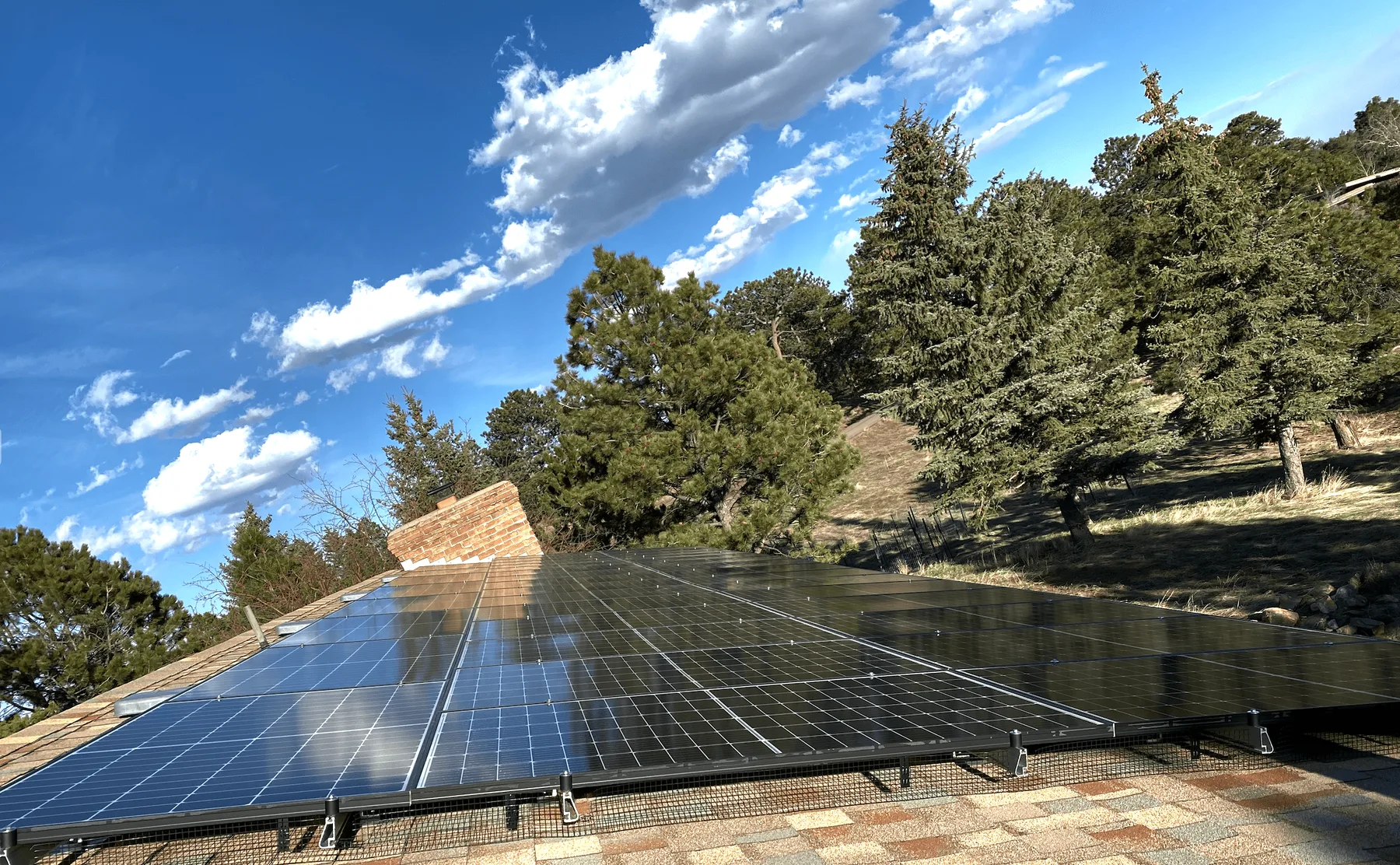
Evergreen, CO · 7.8 kW
Mountain-home rooftop array among the pines
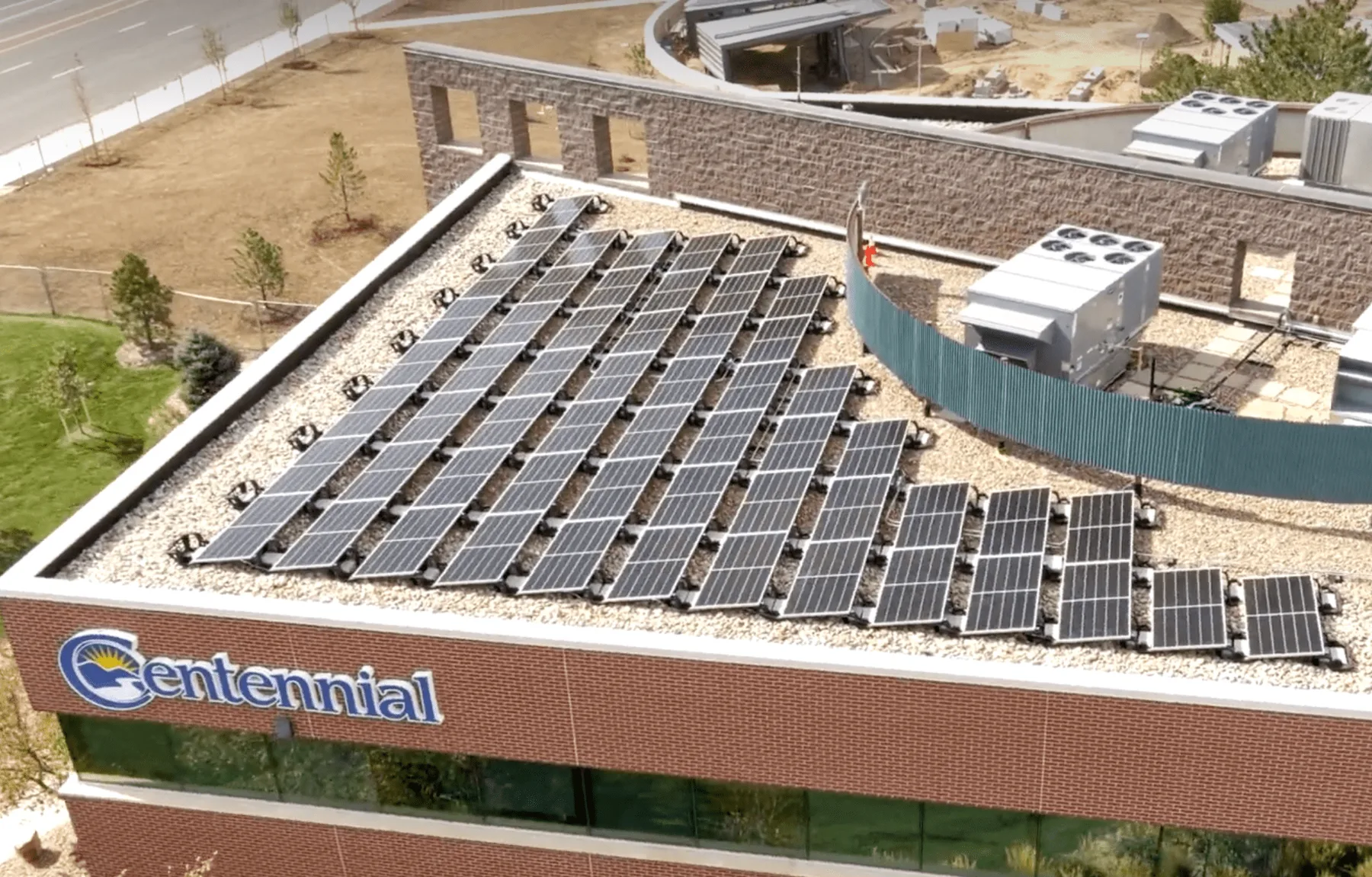
Centennial, CO · 200 kW
Municipal building flat-roof array
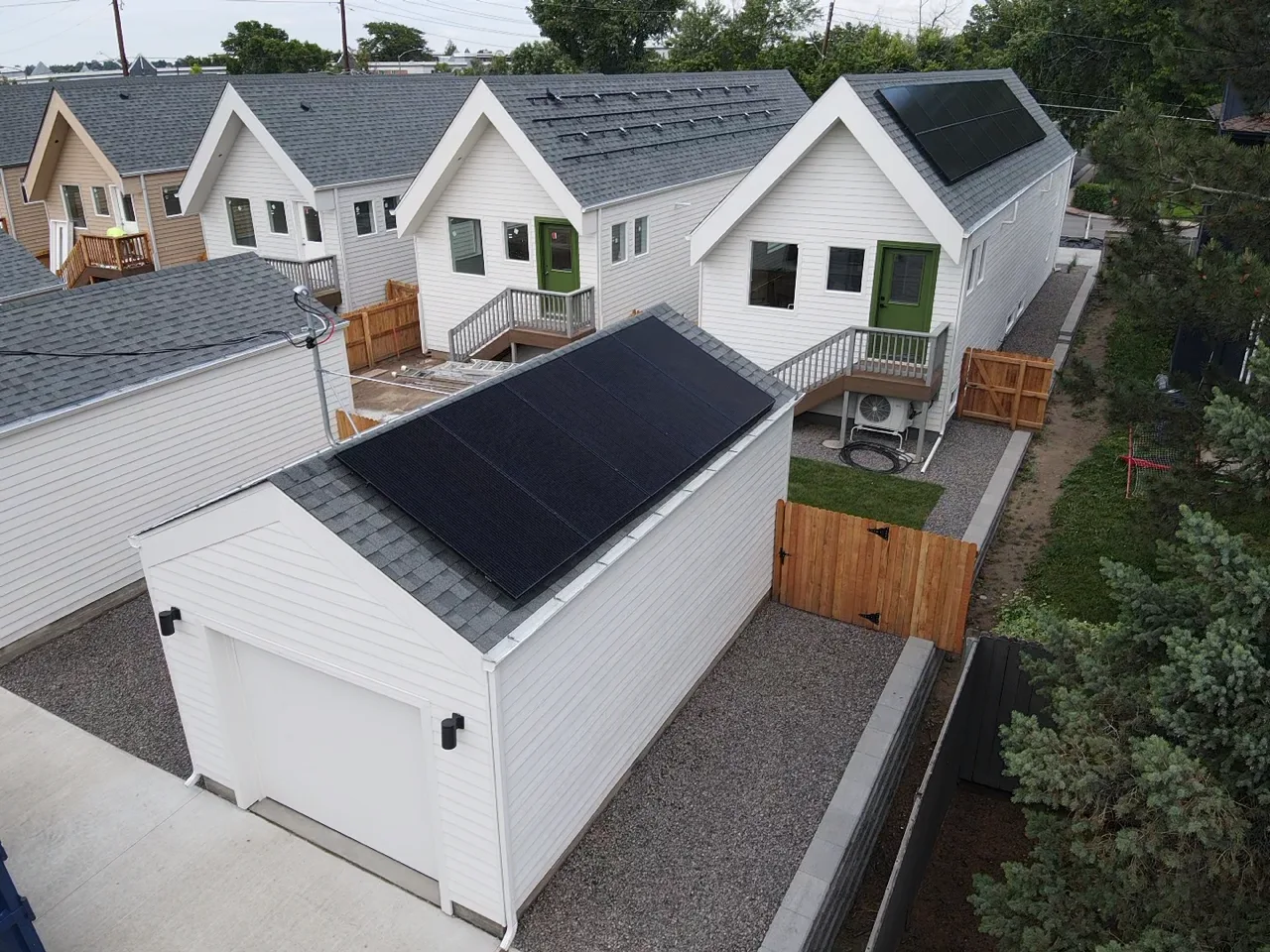
Denver, CO · Builder program
New-construction community, garage-roof solar
The AI in AI Colorado Solar
Snap your bill. Skip the guesswork.
The AI Bill Reader pulls your utility, rate plan, monthly kWh and demand charges from a photo of your electric bill, then runs every calculator with your real numbers. Your image isn’t stored unless you choose to send it to us.
Try the AI Bill ReaderExample readout — illustrative values
All 64 counties
Local rules for every corner of Colorado
Who you’re working with
A Denver installer, not a call center. The person who designs your system works for the company that installs it.
Discovery Clean Energy is led by Jeff Bunge whose local crews handle residential, commercial and new-construction projects across Colorado. We only sell equipment we install and support ourselves.
Meet the teamFAQ
Straight answers
Is solar still worth it in Colorado now that the 30% tax credit is gone?
Sometimes yes, sometimes no — and it depends more on your utility than anything else. The federal homeowner credit (§25D) ended for systems finished after December 31, 2025. What remains: leases and PPAs that pass through the commercial §48E credit as lower payments, Colorado’s 10% battery income-tax credit for tax years through 2026, state sales-tax exemptions, and utility programs. We model your utility’s export rules and tell you plainly if the payback doesn’t work.
What does solar cost in Colorado in 2026?
Our installed pricing runs $2.80–$3.25 per watt before incentives, so a typical 7 kW home system is roughly $19,600–$22,750. Roof complexity, electrical upgrades and ground-mount trenching move it within or beyond that range. Batteries add about $19,000 for a first Tesla Powerwall 3 and about $12,000 for each additional one.
Do you use subcontractors?
No. Our own Colorado crews design and install every system — we don’t hand your roof to an out-of-state subcontractor.
What’s the “AI” in AI Colorado Solar?
Our AI Bill Reader reads a photo of your electric bill — utility, rate plan, monthly usage and demand charges — and fills our calculators with your real numbers instead of guesses. A person on our team still reviews every design; the AI just gets you to honest numbers faster.
Which batteries do you install?
Tesla Powerwall 3 (13.5 kWh usable), Enphase IQ Batteries and SigEnergy — including SigEnergy’s bidirectional EV charger for vehicle-to-home backup with compatible vehicles. We stick to equipment we know well and can support.
Do you serve my part of Colorado?
Yes — we install across all 64 counties, from the Front Range to the Western Slope, San Luis Valley and Eastern Plains. Each county and town page lists the local utility, permit office and programs we check for you.
Get honest numbers for your roof
Our Colorado crew looks up your utility’s current rules, models your roof, and tells you straight — including when solar or a battery won’t pay off.